

May 6, 2026 | Buying
What April’s Numbers Mean If You’re Thinking About Making a Move
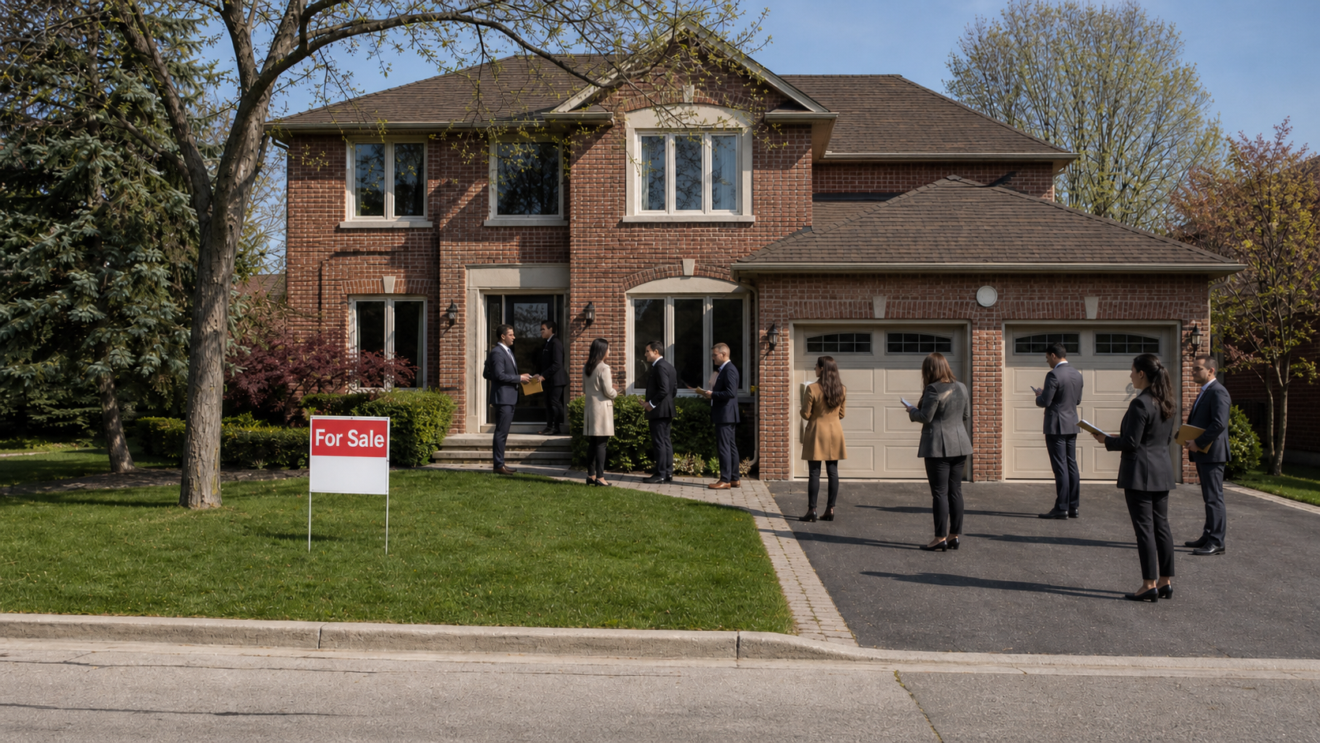
Out of the last seven homes I showed a buyer in Oakville, four went into multiple offers. That isn’t the GTA real estate market story you’d take away from social media right now.
That’s not a story about a hot market or a reason to move faster than you’re ready to. It’s just what’s happening on the ground in one price range, in one part of one of the four markets I work in. And it sits oddly next to a lot of what’s being said about the GTA right now.
The April numbers for the GTA real estate market came out yesterday. Sales were up seven per cent year over year. New listings were down nine per cent. Average price was $1,051,969, which is down about five per cent from a year ago. So more sales, fewer new listings, and prices still soft compared to last spring.
That’s the headline. What I want to talk about is the conversation underneath it, because it’s the conversation I’m actually having with people right now who are weighing whether this is the right time to make a move.
The GTA Real Estate Market Looks Different Depending on Who You Are
If you’re a seller, “prices down five per cent” sounds like a reason to wait. If you’re a buyer, “sales up seven per cent” sounds like the window is closing. Both are oversimplifications.
Underneath the GTA average, the picture changes a lot depending on where you’re looking. Oakville’s average sale price in April was $1,626,843. Burlington’s was $1,039,145. Mississauga’s was $980,653. Milton’s was $989,063. Detached homes in Oakville sold at 98 per cent of list price on average, with an average of 21 days on market. That’s not a market that’s frozen. It’s also not a market that’s overheated. It depends entirely on what the property is, where it is, how it’s priced, and how it shows.
Days on market across the GTA averaged 29 days, up from 25 a year ago. The average sale-to-list ratio is 98 per cent. Most homes are still selling slightly below asking. So in the same month where some buyers are walking into multiple offers, plenty of other listings are sitting and negotiating down.
Both things are true at the same time. That’s what makes the planning conversation more important than the headline.
The Conversation I Have Before Anyone Lists or Buys
When someone calls me thinking about a move, the first thing we don’t talk about is the market. We talk about them.
What are you selling. What are you considering buying. Why are you doing this. What gets better in your life on the other side of the move. Is it more space because the family’s growing. Is it less space because the kids are gone. Is it a commute that’s wearing you down. Is it schools. Is it being closer to parents who need help. Is it that you’ve been promoted and you can finally do something you’ve been putting off, or is it that something changed and you need to be more conservative.
None of that shows up in a Market Watch report. But it’s what determines whether a move is the right move. The market matters, but the market is the second conversation, not the first.
How We Plan the Timing
Once we know why, we plan how. The thing I want to avoid is putting you under the gun, especially in a GTA real estate market that doesn’t reward rushing.
A move that’s planned with breathing room is a different transaction than a move where you’ve already bought and now you have ninety days to sell whatever happens. The first lets you make decisions calmly. The second puts more pressure on you if time’s not on your side. So we map out a timeline that doesn’t put you in a position where you have to turn your property over fast. Sometimes it means waiting on making the purchase. Sometimes it means a longer closing date so you have time. Sometimes it means we wait until something specific is in place. But the goal is always the same: make sure you have room to make good decisions.
We Plan on the Conservative Number, Not the Best Case
If we’re going to make a plan that depends on selling your home for a certain number, the plan has to work on the conservative version of that number. If the numbers make sense while we’re being conservative, then the move makes more sense. If we need the top of the price range to make it work, it gets harder, because the plan only holds if you hit that number.
So we look at the comps and the trend that’s happening in your specific market to see what’s realistic. Recent comparable sales. What’s currently active and how it’s pricing. What’s sold in the last sixty to ninety days and how those numbers compare to where similar homes were listing six months ago. We build the plan around a number you’d be okay with if the market doesn’t cooperate.
The floor isn’t the only number we look at. It’s the starting point. If the floor works, the move works, and anything above that is upside. If the floor doesn’t quite get you to where you need to be, that’s a different conversation, not the end of the conversation. We look at what the gap actually is. We look at whether your home has room to push higher with the right preparation, the right pricing strategy, the right timing. We look at whether the buy side has any flex, a different neighbourhood, a different home type, a different timeline. Sometimes the gap closes when we look at it properly. Sometimes it doesn’t, and the answer is to wait. But you don’t know which one until you actually run the numbers.
Where the GTA Real Estate Market Takes You Next
This is where the buying side comes in. Once we have a realistic conservative sell number, we look at what that buys you in the neighbourhoods you’re considering, in the type of home you actually want.
Sometimes the math works easily. Sometimes it doesn’t, and we have a conversation about what to flex. Maybe the neighbourhood you wanted is out of reach but the one next door isn’t. Maybe the home type needs to shift, semi instead of detached, or a bungalow instead of a two-storey if the next stage of life points that way. Maybe the timing needs to change because of where you are with your current mortgage, when your renewal is coming up, and what carrying costs look like at today’s rates versus where they were when you last bought.
The point is that the buy side and the sell side are one conversation, not two. Decisions on either side affect the other.
What Needs to Happen Before You List
If selling is part of the plan, the next conversation is about what your home actually needs before it goes on the market.
Sometimes the answer is nothing. The home presents well, the price expectation is realistic, and we go. Sometimes there are small things that move the number more than they cost: paint, decluttering, a deep clean, maybe a stager bringing in a few pieces to soften rooms that feel heavy. Sometimes it’s bigger: a kitchen that’s holding the home back, a bathroom that needs to come into this decade, landscaping that makes the front of the home read as cared-for instead of tired.
We don’t do work for the sake of work. We look at where the dollars actually return, and we leave the rest alone. The goal is to put the home on the market in a position where the right buyer doesn’t have to imagine past anything.
Buying in the GTA Real Estate Market
If buying is part of the plan, navigating the GTA real estate market matters.
Don’t ignore what you can see when you walk into a showing. A new listing with cards from other agents on the kitchen counter, a scheduled offer day, multiple offers presented on the day. Those are signals you can read in advance. They tell you what kind of competition you’re walking into before you fall in love with the place.
Plan the offer before you write it. Pull comps. Get a real opinion of what the home is worth based on what comparable homes have actually sold for, not what they were listed at. Know your comfort level, not what your lender approved you for, but what lets you sleep at night for the next five years.
If the number it would take to win isn’t a number you’re comfortable spending, move along. There will be another property. The wrong house at the wrong price is still the wrong house, even if the showing schedule was busy.
Life Doesn’t Pause for Headlines
The thing I keep coming back to is that life moves forward whether the market cooperates or not. People get married, have kids, get promoted, retire, lose someone, have a parent who needs to move closer. The conversation isn’t only whether the market is up or down on average. The conversation is whether this move makes sense for you, and how we navigate from where you are now to where you want to be next.
That’s what we plan together. The GTA real estate market is one input. It’s not the whole conversation, and it’s almost never the most important one.
If you’re thinking about a move and want to sit down and walk through what it could look like, that’s the conversation I’d rather have than any headline.
Get GTA Market Updates Delivered
Sign up to receive my newsletter here and get regular updates about local market changes, the latest listings, and more insider information.